es


The Inter-American Commission on Human Rights (IACHR) concluded its 192nd Period of Sessions, during which 32 public hearings were held. Of these, 27 covered specific human rights situations in 17 countries, and 5 were at the regional level. The issue of Venezuela was the focus in two hearings, and ProBox participated in one of them.
In public hearings, the IACHR received representatives from civil society organizations and member states.
“Venezuela remains at the center of attention of the IACHR. During the two hearings on this country, the IACHR was able to obtain information about the situation of people deprived of liberty in the post-electoral context, received testimonies from family members of victims and civil society on arbitrary detentions, torture, and severe detention conditions. Another topic included the situation of freedoms of expression, association, assembly, and press,” the organization reported in its press release.
The online hearing “Venezuela: Situation of the Right to Freedoms of Expression, Association, Assembly, and Press” included the participation of different actors from Venezuelan civil society, who presented the situation the country is experiencing in terms of human rights, as well as the formal requests made by various organizations to the IACHR and the Venezuelan State.
In addition to ProBox, represented by its Executive Director Mariví Marín Vázquez, the online hearing included representatives from the following organizations:
- Cazadores de Fake News
- Centro de Derechos Humanos de la Universidad Católica Andrés Bello
- Comité para la Protección de los Periodistas (CPJ)
- Espacio Público
- Free Press Unlimited
- Freedom House
- Fundación para la Libertad de Prensa (FLIP)
- Fundamedios
- IFEX – ALC
- Instituto Prensa y Sociedad (IPYS Venezuela)
- Redes Ayuda
- Reporters Without Borders
- Voces del Sur
Numbers on Violations of Freedoms of Expression in Venezuela
Representatives of different organizations working in Venezuela presented data showing the reality faced by the press, human rights defenders, and civil society in the country.
The NGO Espacio Público revealed key numbers:
- During 2024, Espacio Público recorded more than 300 cases of violations of free expression, with an increase of 52% compared to 2023.
- There were 99 arbitrary detentions in 2024, 36 of them for alleged incitement to hatred. Of these detentions, 71 were of people who do not work professionally in communication but share content through available media and platforms.
- Journalistic coverage, dissemination of information, or content of public interest was also the cause of several detentions and criminal proceedings. Of the total detentions, 24 were of journalists and media workers last year.
- 2025 began with a new wave of arbitrary detentions of politicians, activists, and human rights defenders. In just two days, January 7 and 9, more than 50 people were detained, according to local organizations.
- Between January and February, 13 detentions for exercising freedom of expression were recorded, six of them journalists and media workers. From July 28 to the present, eight journalists are in prison, at least three because of their work, and about ten face judicial proceedings.
- The passing of laws continues in an attempt to validate and increase persecution, weakening civic space and, consequently, criminalizing freedom of expression and association.
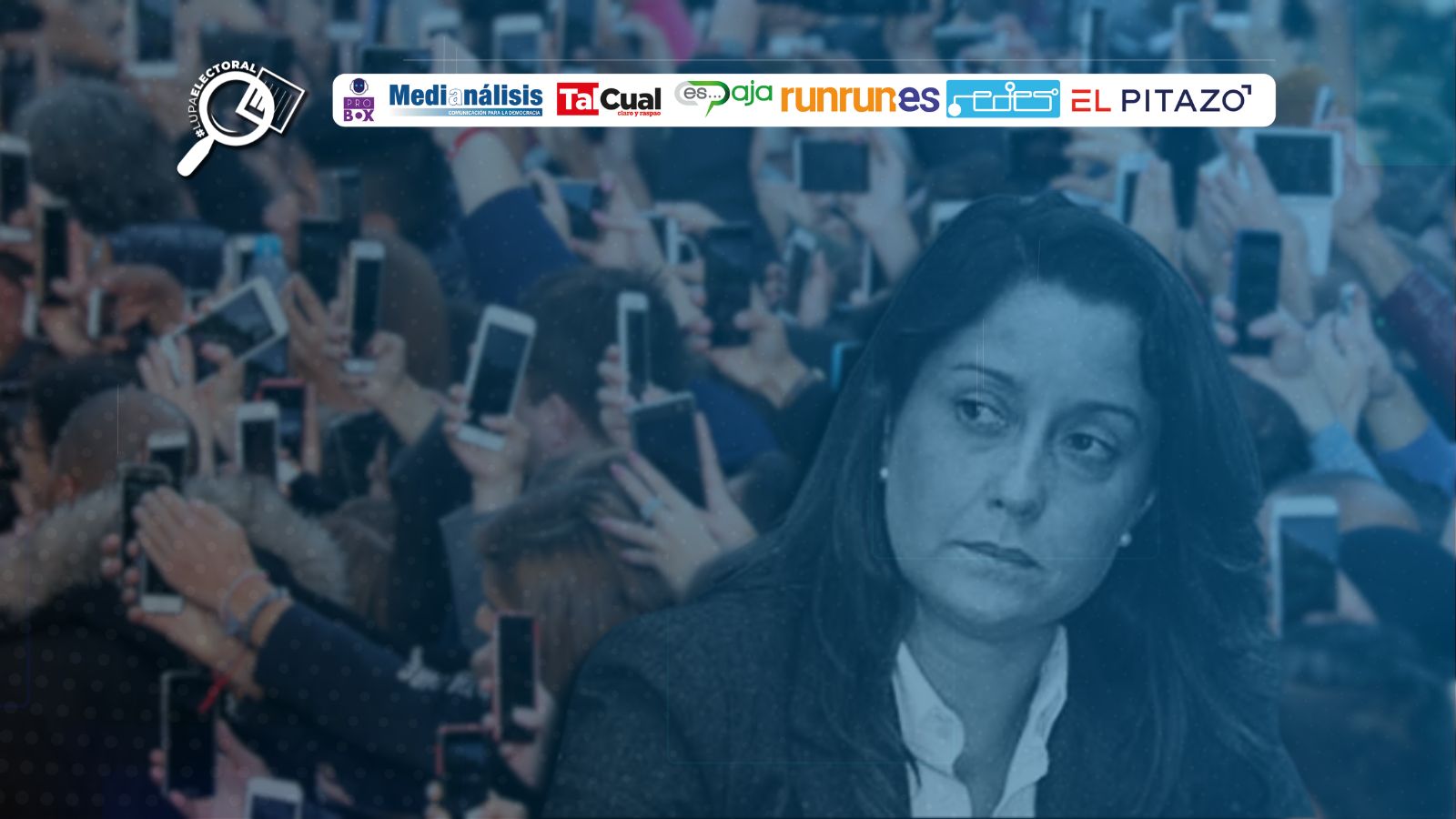
- The hearing also highlighted emblematic cases of detention against human rights defenders, such as journalist and director of Espacio Público Carlos Correa (released), director of the organization Control Ciudadano, Rocío San Miguel (detained for a year), and director of Fundaredes, Javier Tarazona (detained for more than three years).
Passport Revocation as Punishment
In Venezuela, passport revocation has emerged as a tactic of repression against journalists, human rights defenders, and activists. This situation was denounced during the hearing.
The data is key. The Center for Justice and International Law (CEJIL), the Committee of Family Members of Caracazo Victims (COFAVIC), and Institute for Press and Society Venezuela (IPYS-Venezuela) conducted a qualitative investigation documenting 40 cases of passport revocations, especially in the months following the July 28, 2024 presidential elections.
According to the director of the NGO Redes Ayuda, Melanio Escobar, the strategy of passport revocation is not an isolated incident, but part of a broader pattern of state persecution, adding to other forms of repression.
“The lack of transparency and the absence of a clear legal procedure for passport revocation has created a climate of uncertainty among those affected. This practice affects not only those directly persecuted but also their families and the public’s right to be informed,” he stated.
Moreover, the pattern of passport revocation is not limited to high-profile figures. Many affected individuals had medium or low public exposure, indicating that the regime does not only target the most visible leaders but seeks to instill fear among all who work in defending human rights and freedom of expression.
Disinformation and Digital Persecution
From Venezuela, civil society organizations also denounced that disinformation is a crucial tool regularly used by the Venezuelan state to justify control measures against journalists, media outlets, and civil society organizations.
“To control information and content, the Venezuelan government has applied strategies such as censoring websites and controlling what is said in traditional media. But it has also systematically sought to discredit and stigmatize the work of journalists and activists, presenting them as part of an alleged destabilizing plan—a narrative that has served as a prelude to their persecution and judicialization,” said Adrián González, director of Cazadores de Fake News.
However, disinformation is not the only weapon; physical repression also manifested digitally. Our executive director, Mariví Marín, denounced the deployment of a digital machinery of persecution and disinformation supported by state institutions and security forces.
“One of the most alarming mechanisms is VenApp, presented as a citizen reporting platform but used as a tool for denunciation and persecution against critical voices. This strategy has been key in Operation Tun Tun, a hunt that begins digitally and then moves to raids and targeted arrests,” Marín denounced.
But the state does not only persecute: it manipulates. In the hearing before the IACHR, a massive digital campaign was denounced aimed at discrediting allegations of fraud and minimizing post-electoral violence. “Attempts were made to ridicule evidence of irregularities presented by the opposition and international observers, using an army of automated accounts, allied media, and digital operators to amplify the official narrative,” stated ProBox’s founder.
Civil Society Requests to the IACHR
The organizations participating in the online hearing before the IACHR presented a list of requests to restore the rule of law regarding freedoms of expression in the country.
More than 10 requests were presented:
- Immediately release the eight journalists currently imprisoned.
- Drop charges against arbitrarily detained journalists.
- End abuse of the judicial system to persecute and silence the press and ensure a free and plural media environment, protecting journalists and fact-checkers from violence and harassment.
- Guarantee journalists and media access to detailed results of the July 28 scrutiny.
- Stop the use of concessions and administrative measures by the National Telecommunications Commission (CONATEL) as a form of media control.
- Cease the use of surveillance technologies such as VenApp.
- Immediately halt arbitrary passport revocations and other repressive practices.
- Guarantee the right to identity and freedom of movement without political restrictions.
- Allow issuance and renewal of documents without administrative barriers or political discrimination.
- Unblock portals, news sites, and verification platforms whose access has been restricted.
- Repeal the Law Against Fascism, the Law Against Hatred, for Peaceful Coexistence and Tolerance, and the Law on Oversight, Regulation, Operations, and Financing of NGOs and related entities due to their unconstitutionality and arbitrary use to persecute civil society.
- Comply with international standards of freedom of expression and stop using state media to spread political disinformation.
- Refrain from information operations that manipulate public opinion, spread disinformation, or incite hatred.
- Apply the Rabat Action Plan to evaluate hate speech without violating freedom of expression of citizens, activists, and journalists.
Venezuela Faces “State Terrorism”
The first vice president of the IACHR, Andrea Pochak, emphasized not normalizing what is happening in Venezuela against journalists, human rights defenders, and the population in general.
“The frustration we feel as human rights protectors when we cannot do more is indescribable,” she said.
Pochak also highlighted the gravity of the situation in Venezuela, which goes beyond a lack of democracy and is categorized by the Commission as a situation of “state terrorism.”
“In Venezuela, there is a repression ecosystem, no judicial independence, abusive use of force, systematic forced disappearance, alteration of election results, and a general climate of fear among neighbors and civil society. That is state terrorism here and anywhere in the world,” she stated.
The IACHR recognized the work of NGO representatives and civil society who attended the hearing. “What you are doing in this hearing is truly an enormous epic,” Andrea Pochak stated.
For more information on sociopolitical manipulation on social media and digital rights, follow us on @ProBoxVE.
Go to all articles